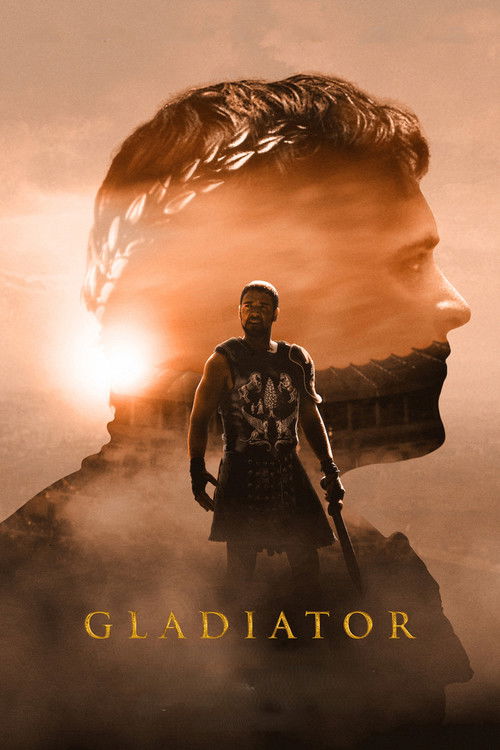
Gladiator
After the death of Emperor Marcus Aurelius, his devious son takes power and demotes Maximus, one of Rome's most capable generals who Marcus preferred. Eventually, Maximus is forced to become a gladiator and battle to the death against other men for the amusement of paying audiences.After the death of Emperor Marcus Aurelius, his devious son takes power and demotes Maximus, one of Rome's most capable generals who Marcus preferred. Eventually, Maximus is forced to become a gladiator and battle to the death against other...
May 4, 2000 · Directed by Ridley Scott
?
A simple estimate based mostly on pace, with small nudges for flow, payoff speed, and how much keeps happening. Rounded to the nearest 5 minutes.
?
How it's told
- Pace. Slow burn or propulsive. How much patience the film asks of you.
- Complexity. Straightforward or demanding. Whether you can sink in, or have to keep up.
What it feels like
- Tone. Light or heavy. Whether it plays for fun or for weight.
- Emotionality. Restrained or openly emotional. How much it reaches for your feelings.
- Outlook. Bleak or hopeful. What it believes about people when it counts.
- Intensity. Gentle or provocative. How far it is willing to push you.
What it's grounded in
- Realism. Stylized or grounded. Whether it feels larger than life or plausibly real.
- Substance. Pure entertainment or ideas. Whether you want a ride or something to chew on.
Cast & crew









Similar movies

Reviews from users
Loading reviews...
Lists featuring this movie
Loading lists...
Stats
Not available yet.